

If you are shopping for the monitor for working from home, the choice is wider than ever. This guide narrows it to 8 monitors worth a closer look, from solid value picks to premium models.
We compared 8 monitors from Dell, AOC, ASUS and ViewSonic using the details on their Amazon listings. For more ideas, see our monitors for drawing and best monitor for students guides.
Where a detail such as HDMI 2.1 or USB-C is not clear on the listing, we say to check it before you buy. We do not list prices because they change often.
Top 3 Best Monitor for Working From Home at a Glance


Best Monitor for Working From Home in 2027
Here are all 8 monitors side by side, so you can compare size, resolution and refresh rate.
| # | Monitor | Size / Resolution | Refresh | Panel / Notes | Category |
|---|---|---|---|---|---|
| 1 | Dell S2725DSM | 27″ 1440p | 144Hz | FreeSync | Best Overall |
| 2 | AOC 27″ QHD 180Hz Gaming Monitor | 27″ 1440p VA | 180Hz | VA | Runner-Up |
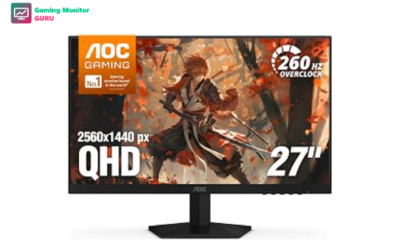
| 3 | AOC 27″ QHD 240Hz Gaming Monitor | 27″ 1440p IPS | 260Hz | IPS | Also Great |
| 4 | ASUS ROG PG32UCDMR | 32″ 4K QD-OLED | 240Hz | QD-OLED | Solid Choice |
| 5 | ASUS TUF Gaming VG259QM5A | 25″ 1080p IPS | 240Hz | IPS | Strong Option |
| 6 | ASUS ROG Strix OLED XG27ACMES | 27″ 1440p OLED | 255Hz | OLED | Worth a Look |
| 7 | ViewSonic VX2718-2KPC-MHD | 27″ 1440p | 180Hz | FreeSync Premium | Good Alternative |
| 8 | KTC 24.5 Inch 1080p 240Hz Monitor | 24.5″ 1080p IPS | 240Hz | IPS | Another Option |


1. Dell S2725DSM – Best Overall
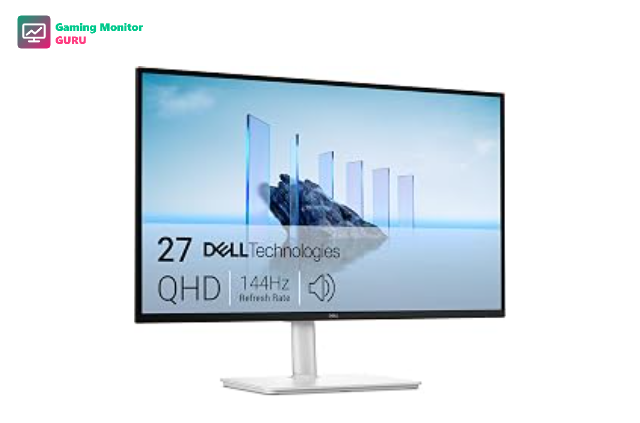
On paper, the Dell S2725DSM is a 27-inch 1440p QHD monitor with a 144Hz refresh rate. Adaptive sync comes from FreeSync. The listing quotes a 1ms response time. Other features mentioned in the listing include built-in speakers.
We do not quote prices because they change daily, so use the Check Price button to see today’s Amazon price and whether it is currently discounted. A 1440p resolution is the sweet spot for most gaming PCs, since many mid-range graphics cards can drive it at high frame rates.
Amazon owners rate it 4.6 out of 5 across 326 ratings, so there is plenty of real-world feedback to read before you buy.
Best for: players who want a balanced 1440p screen.
May not fit if: you need a specification that is not listed in the title, so check the product page first.
2. AOC 27″ QHD 180Hz Gaming Monitor – Runner-Up
The AOC 27″ QHD 180Hz Gaming Monitor is a 27-inch 1440p QHD gaming monitor built around a VA panel. It offers a 180Hz refresh rate. The listing quotes a 1ms response time. Adaptive sync comes from Adaptive-Sync. Other features mentioned in the listing include HDR HDR support.
We do not quote prices because they change daily, so use the Check Price button to see today’s Amazon price and whether it is currently discounted. A 1440p resolution is the sweet spot for most gaming PCs, since many mid-range graphics cards can drive it at high frame rates. VA panels offer strong contrast, but dark scenes can show slower pixel transitions than IPS, so check reviews for smearing if you play fast shooters.
Amazon owners rate it 4.6 out of 5 across 453 ratings, so there is plenty of real-world feedback to read before you buy.
Best for: players who want a balanced 1440p screen.
May not fit if: you play fast shooters and are sensitive to dark-scene smearing.
3. AOC 27″ QHD 240Hz Gaming Monitor – Also Great
The AOC 27″ QHD 240Hz Gaming Monitor is a 27-inch 1440p QHD gaming monitor built around an IPS panel. It offers a 260Hz refresh rate. The listing quotes a 0.3ms response time. Adaptive sync comes from G-Sync Compatible. Other features mentioned in the listing include HDR HDR support.
A 1440p resolution is the sweet spot for most gaming PCs, since many mid-range graphics cards can drive it at high frame rates. IPS panels keep colours and brightness consistent from wide angles, which suits shared screens and desk setups.
Amazon owners rate it 4.5 out of 5 across 683 ratings, so there is plenty of real-world feedback to read before you buy.
Best for: competitive players with a powerful graphics card.
May not fit if: you need a specification that is not listed in the title, so check the product page first.
4. ASUS ROG PG32UCDMR – Solid Choice
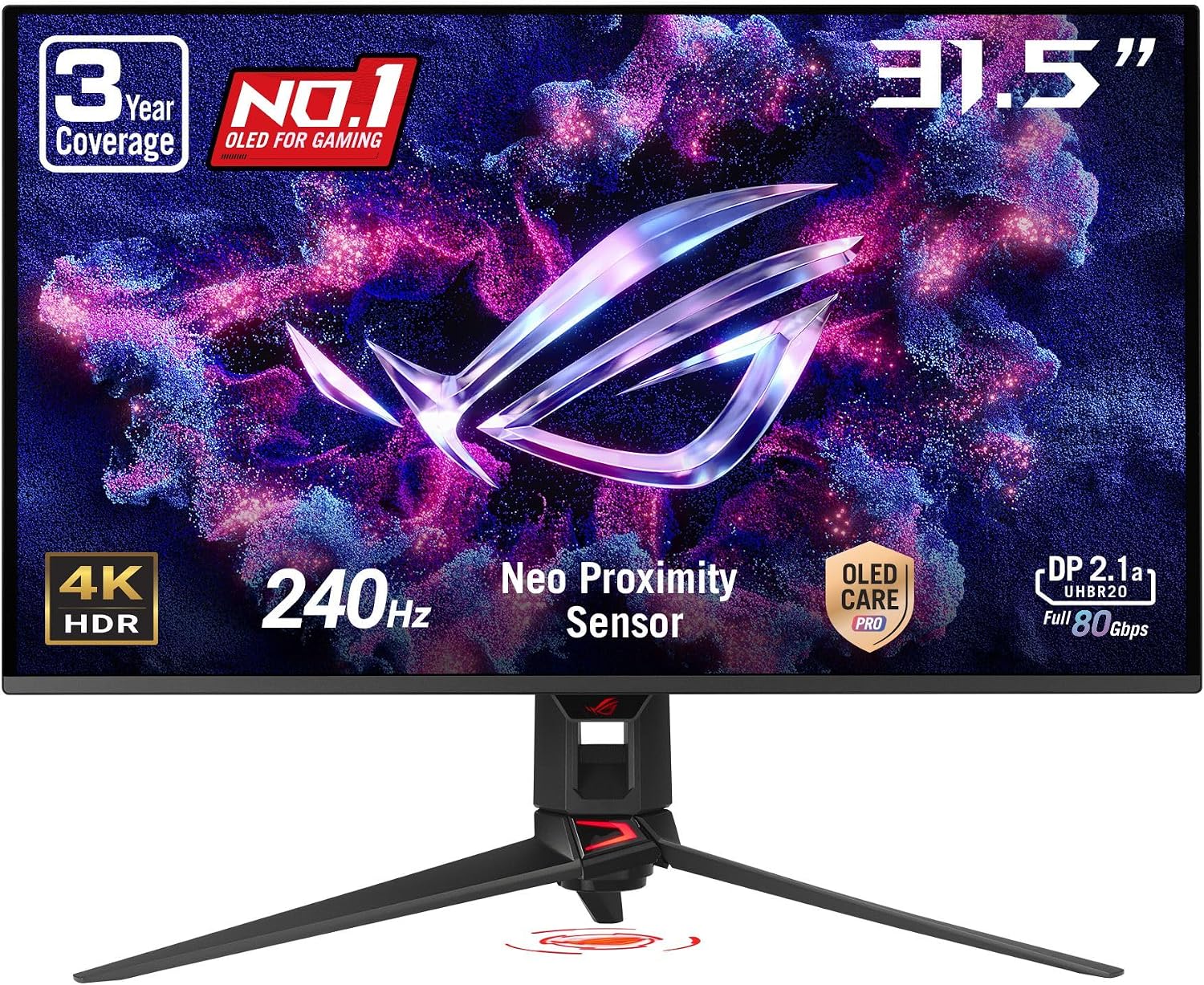
The ASUS ROG PG32UCDMR is a 32-inch 4K UHD gaming monitor built around a QD-OLED panel. It offers a 240Hz refresh rate.
OLED is the main reason to look at this one: each pixel lights itself, so blacks are truly black and motion looks clean at high refresh rates. OLED gives per-pixel contrast and very fast response, but static HUD elements can raise burn-in risk over time, so vary your content and use the screen-saver and pixel-refresh features.
The listing has limited feedback so far, so read the newest customer reviews and check the return policy before you commit. The title does not state the HDMI version, so check the listing before assuming 4K at high refresh rates on a console.
Best for: players who want deep blacks and very fast response.
May not fit if: you leave static windows on screen for hours or play mostly in a bright room.
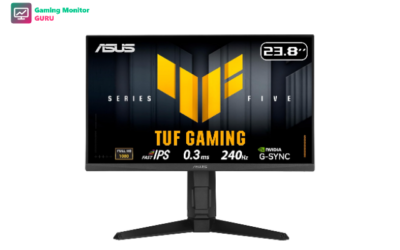
5. ASUS TUF Gaming VG259QM5A – Strong Option

On paper, the ASUS TUF Gaming VG259QM5A is a 25-inch 1080p Full HD monitor with a 240Hz refresh rate, using an IPS panel. Adaptive sync comes from G-Sync Compatible. The listing quotes a 0.3ms response time.
For competitive shooters, a refresh rate of 240Hz gives you a clear motion advantage if your PC can push matching frame rates. A 1080p screen is easy to run on almost any graphics card, which makes high frame rates affordable. IPS panels keep colours and brightness consistent from wide angles, which suits shared screens and desk setups.
Amazon owners rate it 4.6 out of 5 across 79 ratings, so there is plenty of real-world feedback to read before you buy.
Best for: competitive players with a powerful graphics card.
May not fit if: you need a specification that is not listed in the title, so check the product page first.
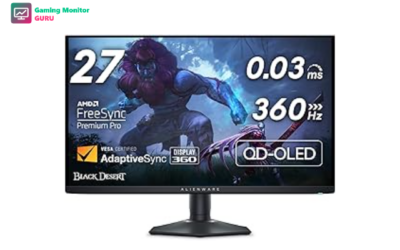
6. ASUS ROG Strix OLED XG27ACMES – Worth a Look

ASUS ROG Strix OLED XG27ACMES pairs a 27-inch 1440p QHD screen with a 255Hz refresh rate and an OLED panel. Adaptive sync comes from G-Sync Compatible. The listing quotes a 0.03ms response time. Other features mentioned in the listing include HDR HDR support and USB-C connectivity.
OLED is the main reason to look at this one: each pixel lights itself, so blacks are truly black and motion looks clean at high refresh rates. We do not quote prices because they change daily, so use the Check Price button to see today’s Amazon price and whether it is currently discounted. OLED gives per-pixel contrast and very fast response, but static HUD elements can raise burn-in risk over time, so vary your content and use the screen-saver and pixel-refresh features.
It has few ratings at the moment, so treat it as a promising option rather than a proven favourite and read the latest reviews first.
Best for: players who want deep blacks and very fast response.
May not fit if: you leave static windows on screen for hours or play mostly in a bright room.
7. ViewSonic VX2718-2KPC-MHD – Good Alternative

The ViewSonic VX2718-2KPC-MHD is a 27-inch 1440p QHD gaming monitor. It offers a 180Hz refresh rate. The listing quotes a 1ms response time. Adaptive sync comes from FreeSync Premium. Other features mentioned in the listing include HDR10 HDR support, a 1500R curve and built-in speakers.
We do not quote prices because they change daily, so use the Check Price button to see today’s Amazon price and whether it is currently discounted. A 1440p resolution is the sweet spot for most gaming PCs, since many mid-range graphics cards can drive it at high frame rates. The 1500R curve is noticeable, which feels immersive for gaming and video but is less ideal for precise design work.
Amazon owners rate it 4.4 out of 5 across 2,388 ratings, so there is plenty of real-world feedback to read before you buy.
Best for: immersive gaming on a curved screen.
May not fit if: you want a flat screen for design or photo work.
8. KTC 24.5 Inch 1080p 240Hz Monitor – Another Option

On paper, the KTC 24.5 Inch 1080p 240Hz Monitor is a 24.5-inch 1080p Full HD monitor with a 240Hz refresh rate, using an IPS panel. Adaptive sync comes from Adaptive-Sync. The listing quotes a 1MS response time. Other features mentioned in the listing include HDR HDR support.
It sits at the affordable end of the market, and 1080p keeps the cost down while still giving you a smooth high refresh rate. IPS panels keep colours and brightness consistent from wide angles, which suits shared screens and desk setups.
Amazon owners rate it 4.6 out of 5 across 2,318 ratings, so there is plenty of real-world feedback to read before you buy.
Best for: competitive players with a powerful graphics card.
May not fit if: you need a specification that is not listed in the title, so check the product page first.
How to Choose the Monitor for Working From Home
Warranty and support
Check the warranty terms on the listing, and read recent reviews for notes on dead pixels, backlight bleed and support.
Resolution and size
Resolution decides how sharp text and games look at a given size. 1440p is a strong balance for most desks, 4K is sharper but needs a stronger graphics card, and 1080p is the cheapest option.
Refresh rate
A higher refresh rate makes motion and scrolling smoother. 144Hz is a good starting point for gaming, and 240Hz or more helps in fast shooters if your graphics card can keep up.
Panel type
IPS gives accurate colour and wide viewing angles, VA gives deeper contrast, and OLED gives near-instant response and perfect blacks. Choose by what you do most.
Ports and connectivity
Check for DisplayPort and HDMI, and for USB-C if you want a single-cable laptop setup. Look at the listing for HDMI 2.1 if you use a console.
Monitor for Working From Home FAQ
What is the best monitor for working from home?
It depends on your budget and how you use it. Our top pick for most people is the Dell S2725DSM, and the table above helps you compare the others.
Is 1440p or 4K better?
1440p is easier to run at high frame rates and looks sharp at 27 inches. 4K is sharper but needs a stronger graphics card.
Is IPS better than VA?
IPS usually has better colour and viewing angles, while VA has deeper contrast. Both can be good value.
Is OLED worth the extra cost?
If you value contrast, colour and response, yes. Use the built-in care features to reduce the risk of image retention.
Final Verdict
For most people, the Dell S2725DSM is a strong place to start when looking for the monitor for working from home. Compare size, resolution and refresh rate against how you use your screen, and check the listing for the latest details.
For more, see our 200hz 1080p monitor guide and our multitasking monitor picks.
Written and reviewed by Ethan Carter. Specs are checked against the manufacturer and Amazon listings. See our editorial policy and review methodology. Last reviewed: November 2026.
Write Your Review
No reviews yet. Be the first to share your experience!