

Looking for best 240hz monitor for photo editing? This guide puts 9 options side by side, based on current Amazon listings, so you can compare screen size, panel type and key features quickly.
Start with the features that matter most for your setup, then check the full list of picks. If you also want related advice, read HDR 10 vs Dolby Vision in 2026: Top 8 Picks before making a final choice.
Top 3 Best 240hz Monitor for Photo Editing at a Glance


Best 240hz Monitor for Photo Editing in 2027
Here is the full comparison of all 9 picks, with the key screen size for each.
| Product | Screen | Link |
|---|---|---|
| Samsung 49″ Odyssey G9 G95C DQHD 240Hz DisplayHDR 1000 | 49-inch DQHD | Check Price |
| GIGABYTE – MO32U24 US – 31.5″ QD-OLED Gaming Monitor | 31.5-inch QD-OLED | Check Price |
| HP OMEN Transcend 32 31.5″ 4K QD-OLED 240Hz Gaming | 31.5-inch 4K QD-OLED | Check Price |
| Dell 240Hz Gaming Monitor 24.5 Inch Full HD Monitor | 24.5-inch Full HD | Check Price |
| ASUSQHD | Check listing | Check Price |
| SAMSUNG 25″ Odyssey G4 Series FHD Gaming Monitor | 25-inch Full HD | Check Price |
| ASUS ROG PG32UCDM 32 Inch 4K 240Hz OLED Gaming | 32-inch 4K OLED | Check Price |
| Dell 24 240Hz Gaming Monitor – SE2426HG – 23.8-inch | 23.8-inch | Check Price |
| ASUS TUF Gaming VG259QM5A 25 Inch 1080p 240Hz G-SYNC | 25-inch 1080p | Check Price |
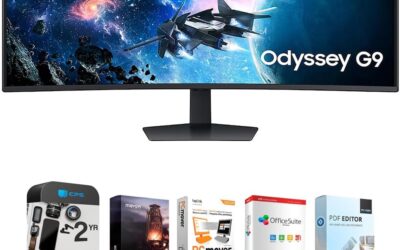
1. Samsung 49″ Odyssey G9 G95C DQHD 240Hz DisplayHDR 1000 – Best Overall
The Odyssey G9 is the largest screen in this list. For photo editing, the extra width fits a full editing window, a file browser and a reference image without constant window switching.
The 240Hz refresh rate helps in games, but color accuracy matters more for editing, so check the listing for color gamut details. Expect a premium price, and measure your desk depth before ordering.
Best for: Editors who want one wide screen for timelines and multiple windows.
May not fit: Anyone with a small desk or a tight budget.
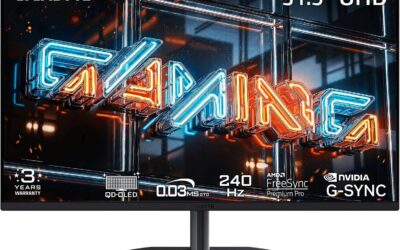
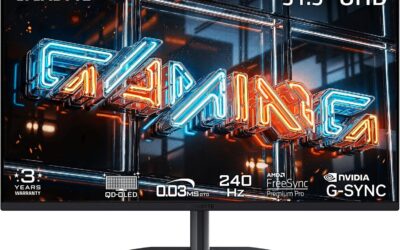
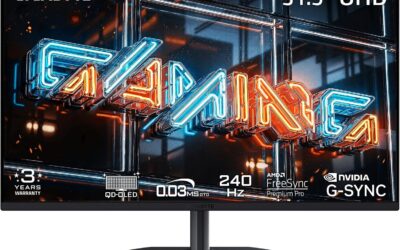
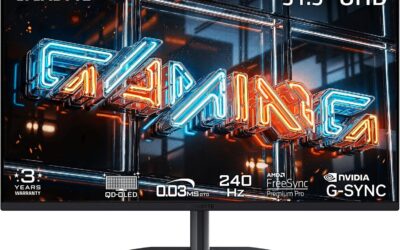
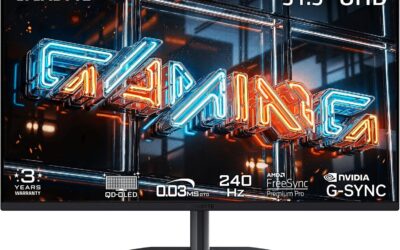
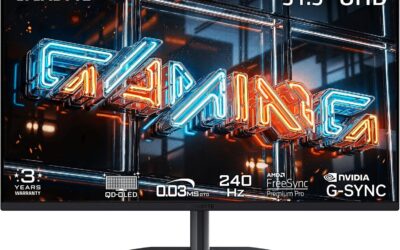
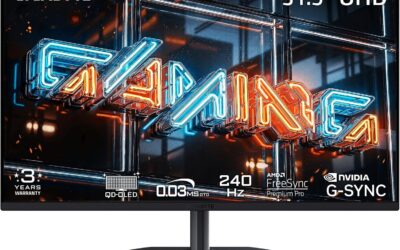
2. GIGABYTE – MO32U24 US – 31.5″ QD-OLED Gaming Monitor – Best Value
The GIGABYTE MO32U24 gives photo editors a QD-OLED panel at 31.5 inches. Deep blacks and vivid colors make it a good match for reviewing images with strong shadows and highlights.
Use a dark wallpaper and enable the monitor pixel refresh features so static interface elements do not leave marks over time. Confirm the exact resolution and color specs on the listing before buying.
Best for: Photographers who want OLED contrast in one 31.5-inch screen.
May not fit: Users who keep static toolbars on screen for many hours a day.
3. HP OMEN Transcend 32 31.5″ 4K QD-OLED 240Hz Gaming – Best Premium
The HP OMEN Transcend 32 pairs 4K resolution with a QD-OLED panel. The extra detail helps when you check sharpness, noise and edge quality at full zoom.
It is a premium choice, so it makes the most sense if you edit photos every day. Check the listing for color modes and hardware calibration support before buying.
Best for: Editors who need 4K sharpness on an OLED screen.
May not fit: Budget buyers and people who only need a monitor for light office work.
4. Dell 240Hz Gaming Monitor 24.5 Inch Full HD Monitor – Best Budget

The Dell 24.5-inch Full HD monitor is the most budget-friendly option in this list. Full HD resolution limits detail when you check sharp photos, so it suits light retouching and learning.
It works well as a second screen for reference images and tool panels. Verify color coverage on the listing before relying on it for final edits.
Best for: Budget buyers who want a second screen.
May not fit: Professional editors who need fine detail and wide color.
5. ASUSQHD – Solid Pick

ASUSQHD appears in the results for this keyword, but the product title does not state the screen size, resolution or panel type, so those details must be checked on the listing.
Treat it as a backup choice. Compare its specs with the monitors above, especially color coverage and ports, before adding it to your shortlist.
Best for: Buyers who already trust this brand and check listing details.
May not fit: Anyone who needs confirmed photo editing specs from the title alone.
6. SAMSUNG 25″ Odyssey G4 Series FHD Gaming Monitor – Best Compact

The Samsung 25-inch Odyssey G4 is a compact monitor for smaller desks. Its Full HD resolution is enough for basic editing and reference screens.
Use it as a secondary monitor or for light editing. For detailed retouching, pick a higher-resolution model from this list.
Best for: Small desks and secondary-screen setups.
May not fit: Detailed retouching and print work.
7. ASUS ROG PG32UCDM 32 Inch 4K 240Hz OLED Gaming – Best OLED Upgrade

The ASUS ROG PG32UCDM brings 4K OLED to a 32-inch screen. The panel gives strong contrast and detail that suits image review and fine retouching.
Like other OLED models, avoid long static displays and use the built-in care features. Check the listing for color coverage and calibration options.
Best for: Editors who want 4K OLED detail at 32 inches.
May not fit: Users who leave static apps open for hours.
8. Dell 24 240Hz Gaming Monitor – SE2426HG – 23.8-inch – Best Small Desk

The Dell SE2426HG is a 23.8-inch monitor that fits compact desks. It suits general use and reference screens better than detailed color work.
Pair it with a larger display if you edit photos, or use it as a secondary screen for tool panels and file browsing.
Best for: Compact desks and secondary screens.
May not fit: Large-canvas photo editing.
9. ASUS TUF Gaming VG259QM5A 25 Inch 1080p 240Hz G-SYNC – Best Alternative

The ASUS TUF VG259QM5A is a 25-inch 1080p monitor with 240Hz and G-SYNC. It is a gaming-first choice rather than a dedicated color editing monitor.
Choose it if you want an affordable alternative and accept the lower resolution. For critical photo work, a higher-resolution model is the better pick.
Best for: Gamers who also do light photo editing.
May not fit: Detail-heavy photo editing and color-critical work.
Buying Guide: How to Choose a 240hz Monitor for Photo Editing
Screen Size
Match the size to your desk depth and viewing distance. Larger screens give more room for panels, but they need more space.
Panel Type
OLED panels offer strong contrast and deep blacks. IPS and other panels are often steadier for long static use. Check the listing for the panel type before you buy.
Resolution
Higher resolution shows more detail when you zoom in on photos, but it also needs a stronger computer to run smoothly.
Color Coverage
Look for color gamut details on the listing. Wide coverage matters more for editing than refresh rate.
Ports and Connectivity
Check that the ports you need, such as HDMI or DisplayPort, are on the model you choose.
FAQ
What is the best 240hz monitor for photo editing?
It depends on your budget and desk. The Odyssey G9 gives the most screen room, while the 4K OLED models give the most detail.
Is 240Hz needed for photo editing?
No. Refresh rate matters more for games. For photo editing, color accuracy and resolution matter more.
Is OLED good for photo editing?
OLED gives strong contrast and vivid color. Avoid long static displays to reduce the risk of burn-in.
Is 1080p enough for photo editing?
It is enough for basic editing and reference screens, but detailed retouching is easier on a higher-resolution monitor.
Final Verdict
For most photo editors, the Samsung 49″ Odyssey G9 gives the most workspace, while the HP OMEN Transcend 32 gives 4K detail on an OLED panel. For more options, see HDR 10 vs Dolby Vision in 2026: Top 8 Picks.
Write Your Review
No reviews yet. Be the first to share your experience!