

G-Sync keeps the screen and your graphics card in step, which removes tearing and stutter when frame rates change. The G-Sync monitors we list here are marked G-Sync compatible on their Amazon listings, so they work with Nvidia graphics cards.
We compared 8 monitors from ASUS, Samsung, AOC, LG, ViewSonic and Acer using the details on their Amazon listings. For fast shooters, see our best gaming monitors for competitive play guide, and for a size to match, our 27 inch gaming monitor picks.
G-Sync compatible models use adaptive sync that Nvidia has validated. A native G-Sync module is a separate feature, so we say to check the listing for the exact type.
Top 3 Best G-Sync Compatible Monitors at a Glance


Best G-Sync Compatible Monitors in 2027
Here are all eight G-Sync compatible monitors side by side, so you can compare size, resolution and refresh rate.
| # | Monitor | Size / Resolution | Refresh | Panel / Notes | Category |
|---|---|---|---|---|---|
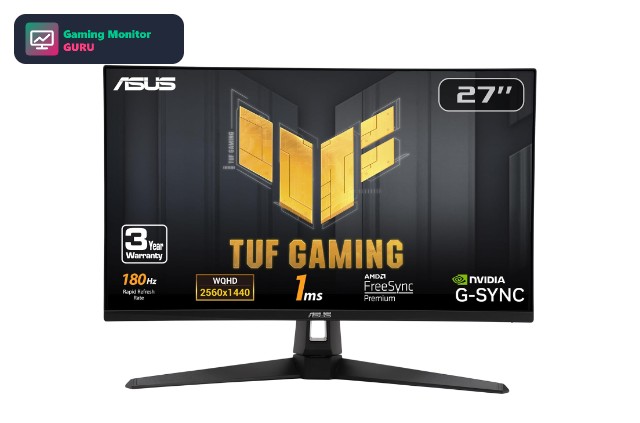
| 1 | ASUS TUF Gaming VG27AQ3A | 27" 1440p | 180Hz | G-Sync | Overall |
| 2 | SAMSUNG Odyssey G50D | 32" 1440p IPS | 180Hz | IPS | Large Screen |
| 3 | AOC 27" QHD 240Hz Gaming Monitor | 27" 1440p IPS | 260Hz | IPS | High-Refresh Pick |
| 4 | LG UltraGear 27GS75Q-B | 27" 1440p IPS | 200Hz | IPS | G-Sync Pick |
| 5 | ASUS TUF Gaming VG259QM5A | 25" 1080p IPS | 240Hz | IPS | Budget Pick |
| 6 | ViewSonic VX2728J-2K | 27" 1440p IPS | 180Hz | IPS | 1440p Pick |
| 7 | Acer Predator X27U | 26.5" 1440p QD-OLED | 240Hz | QD-OLED | OLED Pick |
| 8 | Samsung Odyssey OLED G5 (G50SF) | 27" 1440p QD-OLED | 180Hz | QD-OLED | Solid Alternative |


1. ASUS TUF Gaming VG27AQ3A – Best Overall
ASUS TUF Gaming VG27AQ3A pairs a 27-inch 1440p QHD screen with a 180Hz refresh rate. Adaptive sync comes from G-Sync.
It is listed as G-Sync, which means NVIDIA graphics cards can use variable refresh rate to remove tearing without a dedicated G-Sync module. A 1440p resolution is the sweet spot for most gaming PCs, since many mid-range graphics cards can drive it at high frame rates.
It holds a 4.6-star average from 1,371 Amazon ratings, which gives a useful picture of build quality and reliability.
Best for: players who want a balanced 1440p screen.
May not fit if: you need a specification that is not listed in the title, so check the product page first.
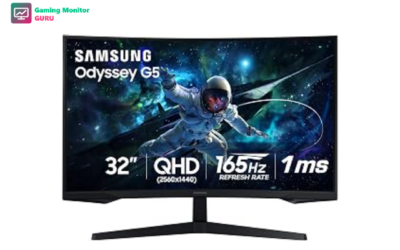
2. SAMSUNG Odyssey G50D – Best Large Screen
The SAMSUNG Odyssey G50D is a 32-inch 1440p QHD gaming monitor built around an IPS panel. It offers a 180Hz refresh rate. The listing quotes a 1ms response time. Adaptive sync comes from G-Sync Compatible. Other features mentioned in the listing include HDR400 HDR support.
It is listed as G-Sync Compatible, which means NVIDIA graphics cards can use variable refresh rate to remove tearing without a dedicated G-Sync module. A 1440p resolution is the sweet spot for most gaming PCs, since many mid-range graphics cards can drive it at high frame rates. IPS panels keep colours and brightness consistent from wide angles, which suits shared screens and desk setups.
It holds a 4.4-star average from 856 Amazon ratings, which gives a useful picture of build quality and reliability.
Best for: players who want a balanced 1440p screen.
May not fit if: you need a specification that is not listed in the title, so check the product page first.
3. AOC 27" QHD 240Hz Gaming Monitor – Best High-Refresh Pick
On paper, the AOC 27" QHD 240Hz Gaming Monitor is a 27-inch 1440p QHD monitor with a 260Hz refresh rate, using an IPS panel. Adaptive sync comes from G-Sync Compatible. The listing quotes a 0.3ms response time. Other features mentioned in the listing include HDR HDR support.
It is listed as G-Sync Compatible, which means NVIDIA graphics cards can use variable refresh rate to remove tearing without a dedicated G-Sync module. A 1440p resolution is the sweet spot for most gaming PCs, since many mid-range graphics cards can drive it at high frame rates. IPS panels keep colours and brightness consistent from wide angles, which suits shared screens and desk setups.
Amazon owners rate it 4.5 out of 5 across 683 ratings, so there is plenty of real-world feedback to read before you buy.
Best for: competitive players with a powerful graphics card.
May not fit if: you need a specification that is not listed in the title, so check the product page first.
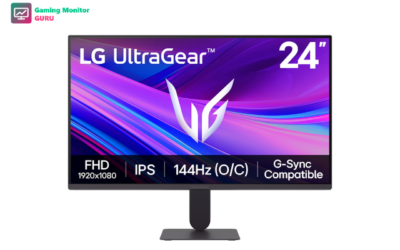
4. LG UltraGear 27GS75Q-B – Best G-Sync Pick

On paper, the LG UltraGear 27GS75Q-B is a 27-inch 1440p QHD monitor with a 200Hz refresh rate, using an IPS panel. Adaptive sync comes from G-Sync Compatible. The listing quotes a 1ms response time. Other features mentioned in the listing include HDR10 HDR support.
It is listed as G-Sync Compatible, which means NVIDIA graphics cards can use variable refresh rate to remove tearing without a dedicated G-Sync module. A 1440p resolution is the sweet spot for most gaming PCs, since many mid-range graphics cards can drive it at high frame rates. IPS panels keep colours and brightness consistent from wide angles, which suits shared screens and desk setups.
The listing has limited feedback so far, so read the newest customer reviews and check the return policy before you commit.
Best for: players who want a balanced 1440p screen.
May not fit if: you need a specification that is not listed in the title, so check the product page first.
5. ASUS TUF Gaming VG259QM5A – Best Budget Pick

On paper, the ASUS TUF Gaming VG259QM5A is a 25-inch 1080p Full HD monitor with a 240Hz refresh rate, using an IPS panel. Adaptive sync comes from G-Sync Compatible. The listing quotes a 0.3ms response time.
It is listed as G-Sync Compatible, which means NVIDIA graphics cards can use variable refresh rate to remove tearing without a dedicated G-Sync module. A 1080p screen is easy to run on almost any graphics card, which makes high frame rates affordable. IPS panels keep colours and brightness consistent from wide angles, which suits shared screens and desk setups.
Amazon owners rate it 4.6 out of 5 across 79 ratings, so there is plenty of real-world feedback to read before you buy.
Best for: competitive players with a powerful graphics card.
May not fit if: you need a specification that is not listed in the title, so check the product page first.
6. ViewSonic VX2728J-2K – Best 1440p Pick

On paper, the ViewSonic VX2728J-2K is a 27-inch 1440p QHD monitor with a 180Hz refresh rate, using an IPS panel. Adaptive sync comes from G-Sync Compatible. The listing quotes a 0.5ms response time. Other features mentioned in the listing include HDR10 HDR support and HDMI 2.1 inputs.
It is listed as G-Sync Compatible, which means NVIDIA graphics cards can use variable refresh rate to remove tearing without a dedicated G-Sync module. A 1440p resolution is the sweet spot for most gaming PCs, since many mid-range graphics cards can drive it at high frame rates. IPS panels keep colours and brightness consistent from wide angles, which suits shared screens and desk setups.
Amazon owners rate it 4 out of 5 across 235 ratings, so there is plenty of real-world feedback to read before you buy.
Best for: players who want a balanced 1440p screen.
May not fit if: you need a specification that is not listed in the title, so check the product page first.
7. Acer Predator X27U – Best OLED Pick

The Acer Predator X27U is a 26.5-inch 1440p QHD gaming monitor built around a QD-OLED panel. It offers a 240Hz refresh rate. The listing quotes a 0.03ms response time. Adaptive sync comes from G-Sync Compatible. Other features mentioned in the listing include built-in speakers and HDMI 2.1 inputs.
It is listed as G-Sync Compatible, which means NVIDIA graphics cards can use variable refresh rate to remove tearing without a dedicated G-Sync module. A 1440p resolution is the sweet spot for most gaming PCs, since many mid-range graphics cards can drive it at high frame rates. OLED gives per-pixel contrast and very fast response, but static HUD elements can raise burn-in risk over time, so vary your content and use the screen-saver and pixel-refresh features.
It holds a 4.4-star average from 174 Amazon ratings, which gives a useful picture of build quality and reliability.
Best for: players who want deep blacks and very fast response.
May not fit if: you leave static windows on screen for hours or play mostly in a bright room.
8. Samsung Odyssey OLED G5 (G50SF) – Solid Alternative

Samsung Odyssey OLED G5 (G50SF) pairs a 27-inch 1440p QHD screen with a 180Hz refresh rate and a QD-OLED panel. Adaptive sync comes from G-Sync Compatible. The listing quotes a 0.03ms response time.
It is listed as G-Sync Compatible, which means NVIDIA graphics cards can use variable refresh rate to remove tearing without a dedicated G-Sync module. A 1440p resolution is the sweet spot for most gaming PCs, since many mid-range graphics cards can drive it at high frame rates. OLED gives per-pixel contrast and very fast response, but static HUD elements can raise burn-in risk over time, so vary your content and use the screen-saver and pixel-refresh features.
Amazon owners rate it 4.4 out of 5 across 521 ratings, so there is plenty of real-world feedback to read before you buy.
Best for: players who want deep blacks and very fast response.
May not fit if: you leave static windows on screen for hours or play mostly in a bright room.
How to Choose a G-Sync Monitor
G-Sync, G-Sync Compatible and FreeSync
G-Sync compatible monitors use the standard adaptive sync that Nvidia cards support. Native G-Sync has a dedicated module, and FreeSync is the AMD version that often also works with Nvidia.
Resolution and refresh rate
1440p at 144Hz to 240Hz is a strong choice for most Nvidia owners. Match the refresh rate to what your graphics card can reach.
Panel type
IPS gives accurate colour, VA gives deeper contrast, and OLED gives the fastest response and perfect blacks. Choose by what you play.
Connection
Use DisplayPort for the best adaptive sync support on PC. HDMI 2.1 models also support it on some setups, so check the listing.
Your graphics card
G-Sync compatible needs a supported Nvidia graphics card and current drivers. Enable it in the Nvidia control panel after you connect the monitor.
Frequently Asked Questions
What is a G-Sync compatible monitor?
It is a monitor with adaptive sync that Nvidia has tested to work with its graphics cards, so it removes tearing and stutter.
Is G-Sync better than FreeSync?
Native G-Sync has a dedicated module, but modern G-Sync compatible and FreeSync monitors perform very similarly for most players.
Do I need an Nvidia card for G-Sync?
Yes, G-Sync needs an Nvidia graphics card. AMD cards use FreeSync, and many monitors support both.
Does G-Sync work over HDMI?
It can on newer models and cards, but DisplayPort is the safest option. Check the listing for details.
Final Verdict
For most Nvidia owners, a 27-inch 1440p G-Sync compatible monitor with 144Hz or more is the best choice. Pick OLED if you want the best contrast and response.
Compare the specs on each listing before you buy. For more, see our best budget computer monitor guide and our best 32 inch monitor picks.
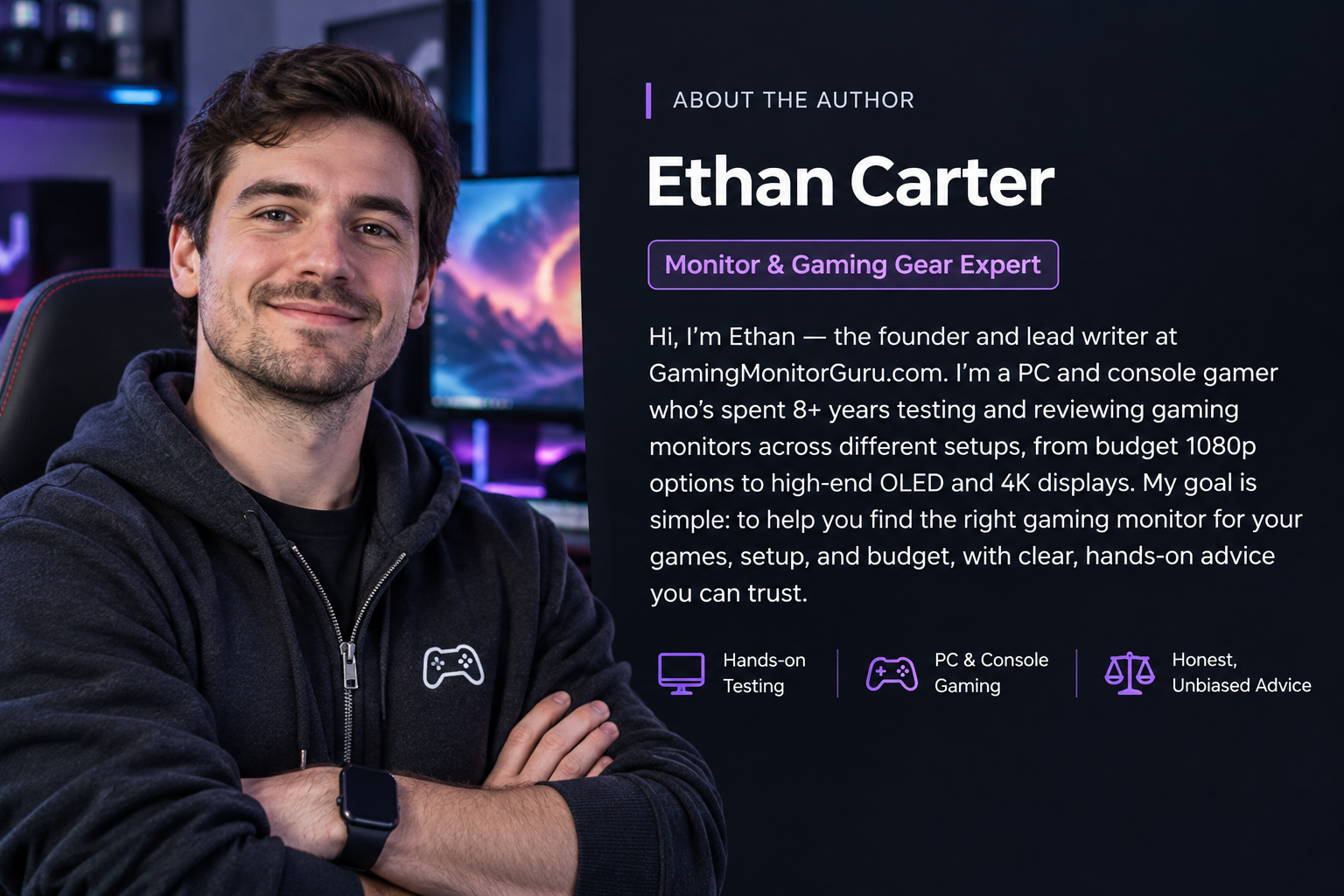
Written and reviewed by Ethan Carter. Specs are checked against the manufacturer and Amazon listings. See our editorial policy and review methodology. Last reviewed: November 2026.
Write Your Review
No reviews yet. Be the first to share your experience!